Views: 0 Author: Site Editor Publish Time: 2026-10-31 Origin: Site


Microfiber lens cloths are widely used to clean eyeglasses, camera lenses, phone screens, sunglasses, and other delicate surfaces. As more people rely on optical devices and electronic screens in their daily lives, the demand for convenient and effective cleaning accessories continues to grow.
However, finding the right microfiber lens cloth is not always easy. Everyday users may want a soft, reusable cloth for personal use, while retailers need attractive products that meet customer expectations. Wholesalers and distributors, on the other hand, often focus on product quality, competitive pricing, customization options, and stable supply.
So, where can you buy microfiber lens cloths? Should you choose an online marketplace, a local optical store, or work directly with a microfiber cloth manufacturer?
This guide explains where to buy microfiber lens cloths, how to choose suitable products, and what wholesalers and retailers should consider when selecting a supplier. It also introduces how JUHAO supports wholesale buyers with microfiber cloth manufacturing and customization services.
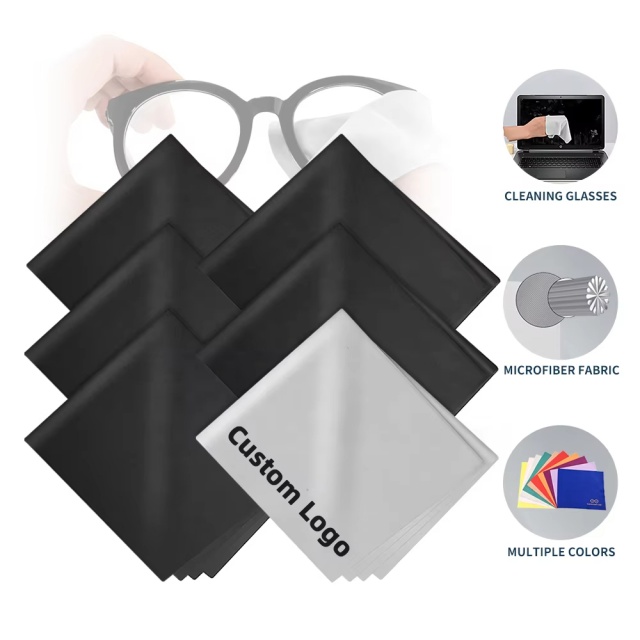
The best place to buy microfiber lens cloths depends on your purchasing needs, order quantity, and budget. Individual users usually prefer convenient shopping options, while businesses may benefit from purchasing directly from manufacturers.
Online marketplaces are convenient places to find microfiber lens cloths in different sizes, colors, styles, and packaging options.
You can compare multiple products, check customer reviews, and choose from individual cloths or multi-piece sets. These platforms are suitable for consumers who need a small quantity for everyday use.
However, product quality can vary between sellers. Before purchasing, pay attention to product descriptions, fabric information, dimensions, customer feedback, and product photos.
Optical stores are another common place to buy microfiber lens cloths. Many eyeglass retailers provide cleaning cloths as accessories for glasses and sunglasses.
Camera shops may also carry microfiber cloths designed for cleaning camera lenses and other optical equipment.
The main advantage of buying from a physical store is that you can inspect the product before purchasing. You can check its softness, size, and overall finish.
However, local stores may have fewer styles and customization options compared with professional manufacturers.
For wholesalers, distributors, retailers, and brands, buying directly from a microfiber cloth manufacturer can be a practical option.
Manufacturers can provide more information about fabric selection, product specifications, production processes, and customization possibilities. Direct communication also helps businesses discuss their requirements before placing bulk orders.
This option is especially suitable for buyers who need regular supply, larger quantities, private-label products, or customized microfiber lens cloths.
A microfiber lens cloth is a cleaning cloth made from fine synthetic fibers. It is commonly used to remove fingerprints, dust, and everyday smudges from delicate surfaces.
Unlike ordinary cotton cloths, microfiber fabrics are made with very fine fibers that create a larger surface area for collecting dirt and particles.
Microfiber cleaning cloths use their fine fiber structure to pick up and hold dust, oils, and small particles during cleaning.
When used properly, they can clean many smooth surfaces without requiring harsh cleaning materials. They can be used dry for light dust removal or slightly damp for more stubborn marks, depending on the surface and manufacturer's instructions.
Lens surfaces and coated screens require careful handling. A soft, well-finished microfiber cloth helps reduce the risk of damage caused by rough fabric or trapped particles.
For this reason, buyers should pay attention to fabric texture, edge finishing, and overall product quality.
Microfiber lens cloths are suitable for a variety of everyday cleaning tasks, including:
Eyeglasses and sunglasses: Removing fingerprints, dust, and everyday smudges.
Camera lenses: Cleaning suitable lens surfaces with gentle handling.
Phone screens: Wiping away fingerprints and light marks.
Tablets and computer screens: Maintaining clean display surfaces.
Other optical accessories: Cleaning compatible smooth surfaces.
Always follow the care instructions for the item being cleaned. Avoid wiping a lens or screen when visible particles may scratch the surface.
Not all microfiber lens cloths are the same. The right product should match its intended use, quality expectations, and purchasing requirements.
Fabric quality is one of the most important factors when choosing a microfiber lens cloth.
A suitable cloth should feel soft and smooth, with an even texture and no obvious loose fibers. The fabric should also be comfortable to handle and suitable for repeated cleaning when properly maintained.
For business buyers, checking samples before ordering is a useful way to evaluate the product.
Microfiber lens cloths are available in different dimensions.
Smaller cloths are convenient for eyeglasses, sunglasses, and portable cleaning kits. Larger sizes may be more suitable for camera accessories, electronic screens, or multipurpose cleaning.
Retailers should consider their target customers and product positioning when selecting dimensions. Wholesalers may also benefit from offering several sizes to meet different market needs.
Fabric thickness and weight can affect how a microfiber cloth feels and performs.
Some customers prefer lightweight cloths that are easy to fold and carry. Others may prefer a thicker fabric for a different handling experience.
When comparing products, buyers should check the actual fabric specifications rather than judging quality by appearance alone.
Edge finishing is another detail worth checking.
A well-finished edge gives the cloth a neat appearance and helps it maintain its shape during regular use. Different finishing methods can also create different product styles.
For retailers and brand owners, the appearance of the finished product may influence how customers perceive its quality.
Before placing a large order, wholesalers and retailers should request samples whenever possible.
Check the fabric texture, dimensions, stitching or edge finishing, color consistency, and packaging. If you have specific requirements, communicate them clearly to the supplier.
Comparing samples from different manufacturers can help you make a more informed purchasing decision.

Best Microfiber Cloth for Clean Eyeglasses

Microfiber Cleaning Cloth for Electronics

10"x 10" Microfiber Eyeglass Cleaning Cloth
Businesses that need microfiber lens cloths in larger quantities often have different priorities from individual consumers. Price matters, but product consistency, customization, communication, and supply capacity are also important.
Purchasing directly from a microfiber cloth manufacturer allows buyers to communicate their requirements with the production source.
This can be helpful when you need specific sizes, colors, fabric styles, or logo designs. It also makes it easier to discuss samples, product specifications, packaging, and order details.
For businesses planning long-term purchases, establishing a relationship with a manufacturer can support more consistent product development and supply.
Wholesale suppliers can be convenient for buyers who need ready-made products in different styles and quantities.
They may offer a selection of products that are already available for distribution. This can be suitable for retailers who do not need extensive customization.
However, buyers should compare the supplier's product range, pricing, minimum order requirements, and ability to meet future purchasing needs.
Before selecting a wholesale supplier or manufacturer, consider the following:
Product quality and fabric specifications
Available sizes, colors, and styles
Logo and packaging customization
Sample availability
Minimum order requirements
Production capacity and communication
Pricing and long-term supply arrangements
A reliable supplier should be able to explain product details clearly and confirm whether the requested specifications can be achieved.
Customized microfiber lens cloths can help retailers, distributors, and brand owners create products that match their market positioning.
Instead of selling only standard products, businesses can develop cloths with their preferred dimensions, colors, styles, and branding.
Different markets may have different preferences for lens cloth dimensions.
Businesses can select suitable sizes according to their customers, packaging requirements, and intended applications. Custom sizing is particularly useful for brands that want to develop their own product ranges.
Color and style can influence the appearance of a microfiber lens cloth.
Retailers may choose colors that match their existing product collections, while promotional businesses may prefer designs that reflect a particular brand identity.
Different fabric styles and edge finishes can also help create a more distinctive product.
Adding a LOGO is a common way for businesses to develop branded microfiber lens cloths.
Customized logo products can be used by optical stores, eyewear brands, promotional companies, and distributors. Before production, buyers should confirm the logo artwork, position, size, and presentation with the manufacturer.
Packaging can also be discussed when a business needs products prepared for retail or promotional distribution.
Proper care helps keep microfiber lens cloths clean and suitable for repeated use.
A microfiber cloth can collect dust, oils, and other particles during use. Regular washing helps remove accumulated dirt.
Use a suitable mild detergent and follow the manufacturer's washing instructions.
Fabric softeners may leave residues on microfiber fibers, while bleach may affect the fabric. It is generally better to avoid these products unless the manufacturer's instructions specifically allow them.
After washing and drying, store the cloth in a clean, dry place. Keeping it away from dust, dirt, and rough materials helps maintain its cleanliness.
One common mistake is choosing a product based only on its price. A low-priced cloth may not meet the quality expectations of your customers.
Another mistake is overlooking product specifications. Buyers should confirm dimensions, fabric details, edge finishing, and customization requirements before ordering.
For wholesale purchases, it is also important not to skip sample evaluation. Checking samples can help identify differences between product descriptions and actual products.
Finally, businesses should consider their long-term needs rather than focusing only on one order. A supplier's communication, product consistency, and customization capabilities can all influence future cooperation.
JUHAO is a microfiber cloth manufacturer with 16 years of microfiber cloth production experience. We provide microfiber cloth wholesale services for businesses looking for product supply and customization support.
Whether you are a wholesaler, retailer, distributor, or brand owner, JUHAO can help you explore suitable microfiber cloth options for your market.
Our customization services include:
Custom Size: Choose dimensions according to your product requirements.
Custom Color: Select colors that match your market or brand.
Custom Style: Discuss different fabric styles and finishing options.
Custom LOGO: Add your brand identity to customized products.
If you are looking for microfiber cloth wholesale, you can explore the JUHAO microfiber brand and discuss your product requirements with our team.
We aim to support business buyers with manufacturing experience, flexible customization options, and communication throughout the product development process.
Finding the right microfiber lens cloth depends on your intended use, product quality expectations, and purchasing needs. Everyday users can compare fabric quality, size, and convenience, while retailers and wholesalers should also consider customization, pricing, and supplier reliability.
For businesses looking for microfiber cloth wholesale, working directly with an experienced manufacturer can make product selection and customization more straightforward. With 16 years of production experience, JUHAO offers customized microfiber cloth solutions in different sizes, colors, styles, and LOGO designs.